Table of Contents▼
- Available Subjects
- About ECE at MMMUT Gorakhpur
- Key Highlights
- Programs Offered by the Electronics & Communication Engineering Department
- Minor Degree & Specializations in ECE
- Number of B.Tech Seats in ECE (First Year)
- B.Tech ECE(IOT) Seat Intake
- Major laboratories in the department
- Electronics & Communication (ECE) Placements 2026 at MMMUT
- Past Recruiters for Electronics & Communication Engineering at MMMUT
Available Subjects
Electronics and Communication Engineering subjects at Madan Mohan Malaviya University of Technology, Gorakhpur are organized semester-wise below. Click any subject to open its PYQ PDF directly.
Semester 1
Semester 2
Semester 3
Semester 4
About ECE at MMMUT Gorakhpur
The Department of Electronics & Communication Engineering at MMMUT Gorakhpur was established in 1973 with an initial intake of 20 students. The intake was increased to 75 from the academic session 2000–01 and to 120 from the academic session 2015–16. The department offers B.Tech. in Electronics & Communication Engineering along with M.Tech. programmes in VLSI and Communication System.
Facilities for Ph.D. research are also available through QIP (Quality Improvement Programme), TEQIP (Technical Education Quality Improvement Programme), and university schemes. A Center of Excellence (CoE) Lab has been established with support from Texas Instruments under the Texas Instruments University Program.
Key Highlights
- Flexible branch between core electronics and IT
- Concept-heavy and abstract subjects
- Requires self-direction and clarity
- PYQs and selective study are common strategies
- Multiple career paths but effort-driven outcomes
Programs Offered by the Electronics & Communication Engineering Department
1. B.Tech. in Electronics & Communication Engineering 2. M.Tech. in VLSI 3. M.Tech. in Communication System 4. Ph.D. in Electronics and Communication Engineering Note: The department previously offered M.Tech. in Digital Systems (from 2003–04) and M.Tech. in Communication Engineering (from 2012–13). The current programme list includes M.Tech. in VLSI and M.Tech. in Communication System. As programme offerings may be revised by the university from time to time, candidates are advised to refer to the official university website or contact the department for the latest information.
Minor Degree & Specializations in ECE
If you are a non-ECE student (like from CSE, ME, or Civil) but you have a strong interest in electronics, you can opt for an extra Minor Degree in ECE. Let's be honest, studying extra subjects on top of your main branch syllabus increases your academic load and can be quite tough. But the hard work pays off because graduating with two degrees definitely makes you stand out in the society and the job market. ► The Rule for Core ECE Students (Specialization vs Minor) Regular ECE students cannot get a "Minor Degree" from their own department. However, there is a great alternative. Starting from the 4th semester, when ECE students have to choose their Program Electives (PE), they can pick subjects from a specific "micro-specialization bucket." If an ECE student continuously chooses electives from that exact same bucket up to the 8th semester, they will get a "Specialization" in that field officially printed on their regular B.Tech degree. (Note: The list of subjects for ECE specialization is completely different from the minor degree list. Core ECE students should check the official department notice to see their specific specialization options). ► Available Minor Options (For Non-ECE Students of 2024-2028 Batch) If you are a non-ECE student aiming for the minor degree, you have to choose a specific area. Based on the current department list, there are two main minor options available: • Option 1: Drone Technology • Option 2: IoT, Robotics & Automation (Note: These minor lists can vary depending on the batch, so always check the official notices when you reach your 4th semester). ► Subject Highlights (What you will actually study for the Minor) To earn those 20 extra credits for the minor degree, you have to study one subject from your chosen bucket in every semester. Here is a quick look at the subjects: ৹ For Drone Technology: You will study Introduction to Drones, Dynamics and Control of Drones, Autonomous Navigation of Drones, and Autonomous Drones Programming, followed by a final Minor Project. ৹ For IoT, Robotics & Automation: You will study Fundamentals of Analog and Digital Electronics, Embedded Systems & Microcontroller Programming, IoT Systems & Cloud Integration, and Robotics System & Intelligent Automation, ending with a Minor Project. ► The Minimum Student Requirement There is a practical condition for any of these subject buckets to run. A specific option will only be taught if a minimum number of students select it. If a bucket doesn't get the required number of students, it simply gets dropped. In that case, the students who originally chose it will be asked to shift to another bucket that already has extra students, or where their joining completes the minimum requirement.
Number of B.Tech Seats in ECE (First Year)
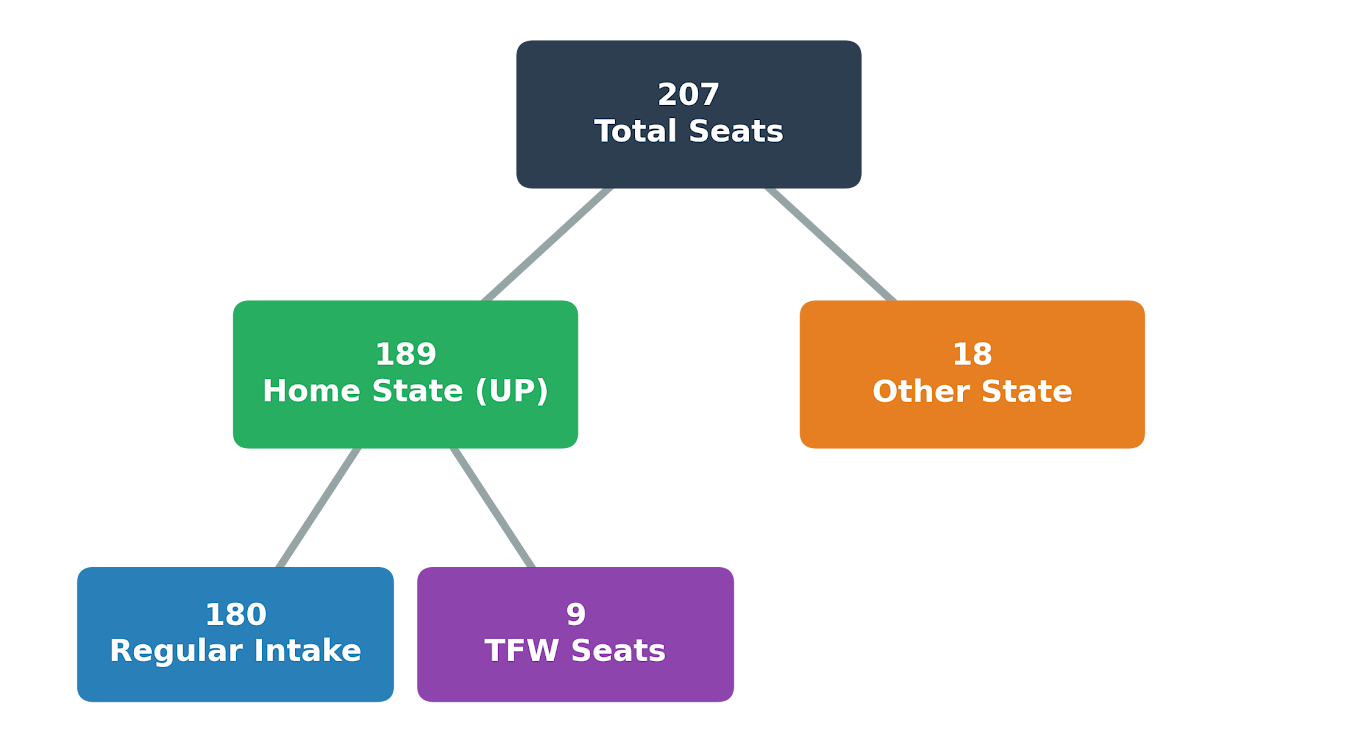
In the ECE branch, there are exactly 207 seats available in the first year. The matrix is divided into 180 regular seats, 9 extra TFW seats for UP students, and 18 seats reserved for other state students.
B.Tech ECE(IOT) Seat Intake
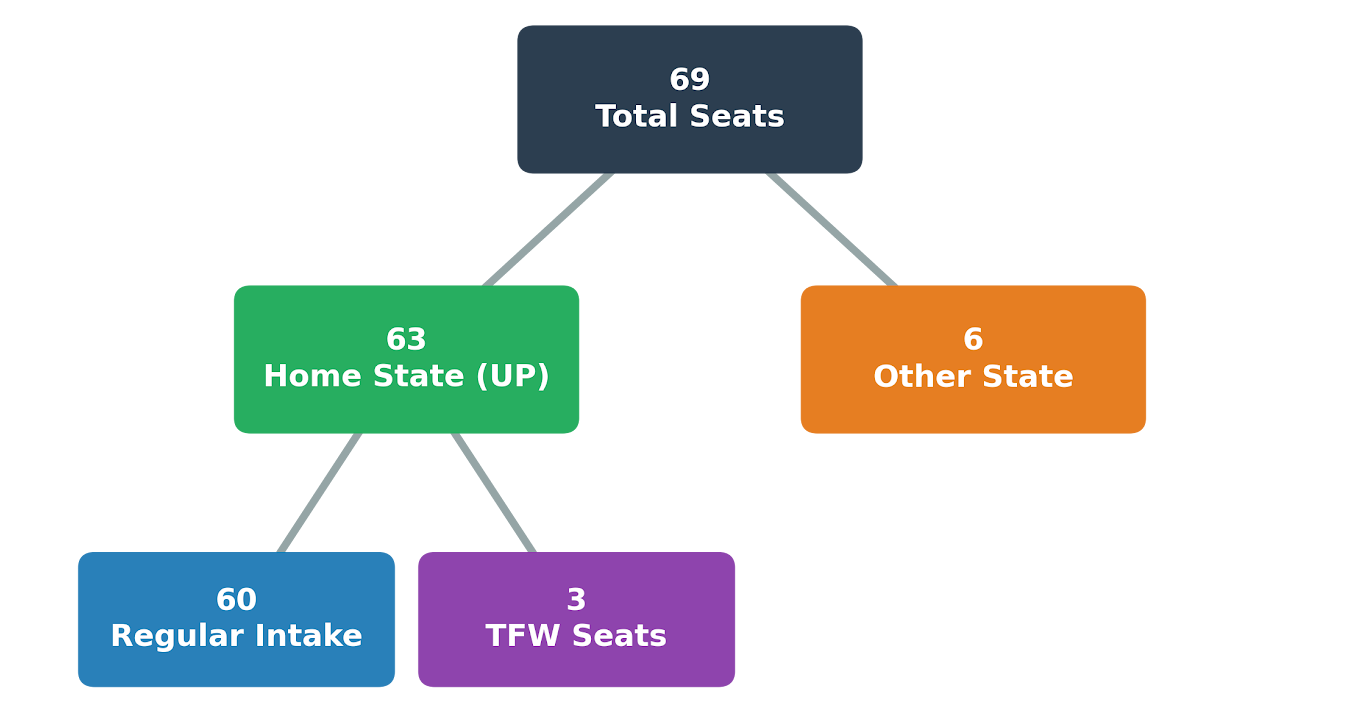
The ECE (IoT) branch has a smaller intake of 69 seats, and you should note that this is a self-financed course. The division is simple: 60 regular seats, 3 TFW seats for home state, and 6 seats for other state candidates.
Major laboratories in the department
1. Microwave & Optical Fiber Lab 2. Communication Lab 3. CAD Lab/DSP Lab 4. Basic Electronics Lab 5. Electronics Measurement & Instrumentation Lab 6. PCB & Electronics Workshop Lab 7. Digital Electronics & Micro-Processor Lab 8. VLSI & Research Lab 9. Center of Excellence (CoE) Lab
Electronics & Communication (ECE) Placements 2026 at MMMUT

- Ritika Rao
- Sanjana Agrahari
Past Recruiters for Electronics & Communication Engineering at MMMUT
For Electronics and Communication Engineering (ECE) students at MMMUT, the placement drive brings a good mix of core hardware, telecommunications, and defense tech companies. When you check the past placement records, you will find major firms like Bharat Electronics, Tejas Networks, and Dixon (PADGET) regularly recruiting from this branch.
| Company Type | Top Recruiters (MMMUT ECE) |
|---|---|
| Core Telecom & Electronics | |
| IT Services & Tech |
These companies generally look for students to fill roles in network infrastructure, embedded systems, and consumer electronics manufacturing. Note: The visiting companies and total offers can shift every placement cycle depending on industry demands. To get the most accurate and up-to-date placement records, always make sure to visit the official MMMUT website.