Table of Contents▼
Available Chapters
The chapter list below for English in Class 10 helps students move directly to the topic they want instead of browsing unrelated material.
- A Baker from Goa
- A Letter to God
- A Question of Trust
- A Tiger in the Zoo
- A Triumph of Surgery
- Amanda
- Animals
- Bholi
- Fire and Ice
- Footprints without Feet
- For Anne Gregory
- From the Diary of Anne Frank
- Glimpses of India
- How to Tell Wild Animals
- Madam Rides the Bus
- Mijbil the Otter
- Nelson Mandela: Long Walk to Freedom
- The Ball Poem
- The Book That Saved the Earth
- The Hack Driver
- The Making of a Scientist
- The Midnight Visitor
- The Necklace
- The Proposal
- The Semon at Benares
- The Tale of Custard the Dragon
- The Thief's Story
- Two Stories about Flying ( His First Flight )
- Two Stories about Flying ( The Black Aeroplane )
About Class 10 English
English is a 100-mark subject in CBSE boards and directly affects your overall result. Unlike subjects based on formulas or numerical solving, English tests comprehension, writing skills, and clarity of expression. Strong performance here can boost your percentage significantly, while careless mistakes can easily reduce marks.
Students score well in English when they focus on understanding the pattern of questions, practicing writing formats, and improving answer presentation. PYQs help identify commonly asked questions from literature and the type of writing tasks that appear in exams. Many students think English does not require preparation and leave it for the last moment. Some rely only on reading summaries without understanding the text. Others ignore writing practice, which leads to poor performance in sections like letters and long answers.
Key Highlights
- 100-mark subject that can boost overall percentage
- Focuses on writing skills, comprehension and clarity
- PYQs help identify repeated literature questions
- Writing format and presentation matter a lot
- Easy to score with proper strategy
- Common mistakes can easily reduce marks
CBSE Class 10 English: Complete Syllabus & Exam Blueprint (2025-26)
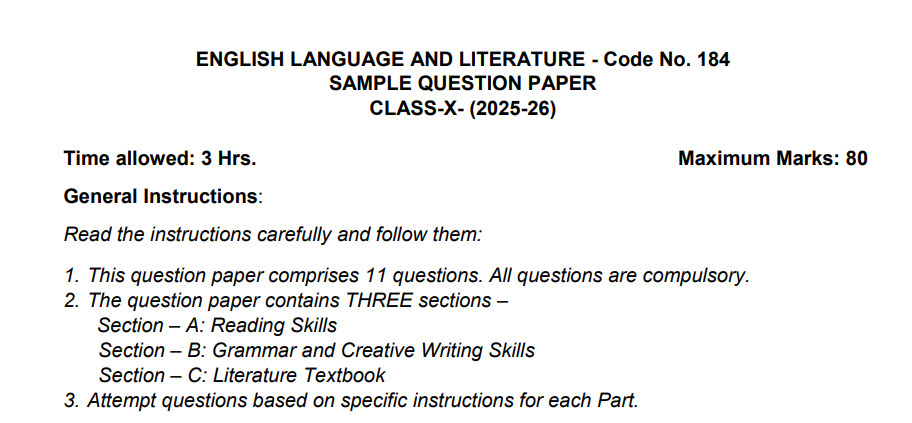
Mastering Class 10 English requires a balance of analytical reading, grammatical accuracy, and literary appreciation. Below is the comprehensive guide designed to help you streamline your preparation and maximize your score. The theory paper is conducted for 80 Marks.
| Section | Title | Weightage | Core Focus |
|---|---|---|---|
| Section A | Reading Skills | 20 Marks | Comprehension & Inference |
| Section B | Writing Skills & Grammar | 30 Marks | Accuracy & Formal Expression |
| Section C | Literature Textbook | 30 Marks | Analysis, Themes & Context |
| Total | 80 Marks | Theory Examination |
The remaining 20 marks are allocated for internal assessment. Section A focuses on Reading Skills (20 Marks) testing comprehension and inference through Discursive and Case-based Factual Passages. Section B covers Writing Skills & Grammar (30 Marks), emphasizing accuracy and formal expression like Formal Letters and Analytical Paragraphs. Section C is the Literature Textbook (30 Marks) which evaluates analysis, themes, and context. Strategic Preparation Roadmap for 2026: 1. Reading Strategy: Do not read the passage first. Read the questions first, then scan the passage for answers. This saves time and increases accuracy. 2. Grammar Mastery: These 10 marks are highly scoring. Maintain a notebook of common errors in Subject-Verb Concord and Reported Speech for daily revision. 3. Literature Approach: Examiners reward students who reference the text. Use specific keywords, character names, and themes in your long-answer responses. 4. Writing Efficiency: Always adhere to the word limit (100–120 words). Structure your paragraphs clearly: Introduction, Body (Analysis/Content), and Conclusion.
CBSE Class 10 English: Complete Literature Syllabus (2025-26)
To score well in the English Literature section, it is essential to have a clear understanding of the syllabus. Below is the comprehensive chapter-wise list from your prescribed textbooks (First Flight and Footprints Without Feet). Important Tips for Exam Success: Prose & Play: The Proposal is a significant play; focus on character dialogues and the underlying theme.
| Book | Section | Chapter / Poem Name |
|---|---|---|
| First Flight | Prose | 1. A Letter to God 2. Nelson Mandela - Long Walk to Freedom 3. Two Stories about Flying 4. From the Diary of Anne Frank 5. Glimpses of India 6. Mijbil the Otter 7. Madam Rides the Bus 8. The Sermon at Benares 9. The Proposal (Play) |
| Poetry | 1. Dust of Snow 2. Fire and Ice 3. A Tiger in the Zoo 4. How to Tell Wild Animals 5. The Ball Poem 6. Amanda! 7. The Trees 8. Fog 9. The Tale of Custard the Dragon 10. For Anne Gregory | |
| Footprints Without Feet | Supplementary | 1. A Triumph of Surgery 2. The Thief's Story 3. The Midnight Visitor 4. A Question of Trust 5. Footprints Without Feet 6. The Making of a Scientist 7. The Necklace 8. Bholi 9. The Book that Saved the Earth |
Poetry Section: Study the 'Poetic Devices' (e.g., Metaphor, Simile, Personification) for each poem, as objective questions are frequently asked from this area. Supplementary Reader: Footprints Without Feet questions are often 'value-based.' Practice explaining the moral of each story in your own words.
CBSE Class 10 English: Deleted Topics (2025-26)
To help students focus their preparation on the current curriculum, CBSE has excluded certain topics and chapters from the 2025–26 syllabus. Please note that these items will not be tested in the board examinations. Important Note for Students: Focus on Current Syllabus: Ensure your study materials and practice papers are aligned strictly with the current 2025–26 curriculum.
| Section | Category | Deleted Topics / Chapters |
|---|---|---|
| Grammar | Clauses & Prepositions | Use of Passive Voice, Noun Clauses, Adverb Clauses, Relative Clauses, and Prepositions |
| First Flight | Prose | The Hundred Dresses - I The Hundred Dresses - II |
| Poetry | Animals | |
| Footprints without Feet | Supplementary | The Hack Driver |
Do Not Study These: You do not need to prepare these specific chapters or grammar topics for your board assessments. Check Regularly: Always cross-reference your preparation with the latest official CBSE circulars or your school-provided curriculum guide.
CBSE Class 10 English: Recommended Reference Books
While NCERT textbooks remain the primary authority for the board examination, reference books are essential for mastering grammar, improving writing skills, and practicing a wide variety of question formats. How to Use These Resources Effectively: For Grammar: Use Wren and Martin to build a solid foundation.
| Book Name | Author / Publisher | Purpose |
|---|---|---|
| English Communicative | Oswaal | Question bank & practice papers |
| Language and Literature: All in One | Arihant Experts | Comprehensive theory & chapter summaries |
| Xam Idea: Complete English Course | VK Global | Intensive practice & exam-oriented questions |
| High School English Grammar & Composition | Wren and Martin | The gold standard for mastering grammar rules |
| English Language and Literature | Together With | Practice sets & detailed study material |
It is the most reliable resource for understanding complex rules of syntax and composition. For Practice: Use Oswaal or Together With to solve previous year questions (PYQs) and sample papers. This helps you get familiar with the current board paper pattern and marking scheme. For Quick Revision: Use Arihant All in One or Xam Idea to get concise summaries, character sketches, and key themes when you are short on time before an exam.