Table of Contents▼
- Available Subjects
- About EE at MMMUT Gorakhpur
- Key Highlights
- Why Choose Electrical Engineering at MMMUT
- Programs Offered
- Minor Degree Programs Offered by EE (For Other Branches)
- MMMUT B.Tech Electrical Engineering Syllabus Overview
- GATE Syllabus vs. MMMUT B.Tech Syllabus Alignment
- Electrical Engineering Infrastructure and Laboratories at MMMUT
- Seat Matrix and Intake of Electrical Engineering at MMMUT
- Electrical Engineering (EE) Placements: 2026 Batch
- Past Recruiters for Electrical Engineering at MMMUT
Available Subjects
Electrical Engineering subjects at Madan Mohan Malaviya University of Technology, Gorakhpur are organized semester-wise below. Click any subject to open its PYQ PDF directly.
Semester 1
Semester 2
Semester 3
Semester 4
About EE at MMMUT Gorakhpur
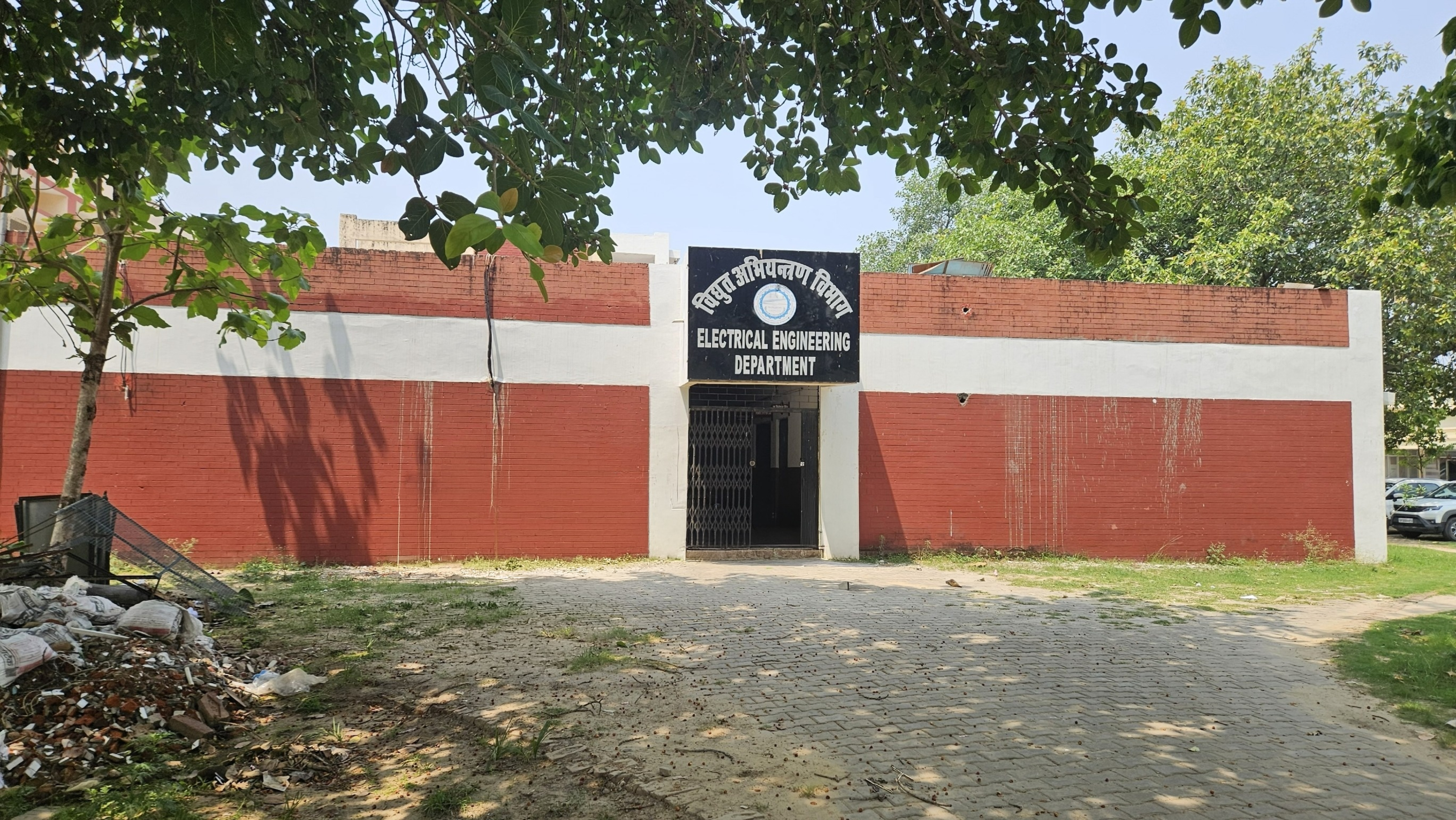
The Department of Electrical Engineering at MMMUT was established in 1962 and is one of the oldest departments of the university. Its B.Tech Electrical Engineering programme holds NBA accreditation under the Washington Accord. At the postgraduate level, the department offers M.Tech in Power Electronics and Drives. The academic focus includes electrical machines, power systems, circuits, control systems and related laboratory work.
Key Highlights
- Core engineering branch with real-world applications
- Subjects require conceptual understanding and numerical practice
- Important for power systems and infrastructure
- Strong base for GATE and government exams
- Consistent effort is required to perform well
Why Choose Electrical Engineering at MMMUT
Electrical Engineering (EE) at MMMUT Gorakhpur is a practical option for students looking for a recognized government engineering college at a relatively accessible rank. In recent admissions, the branch remained available at closing ranks above 1.25 lakh CRL for General category candidates, making it a suitable choice for students who may not secure Electrical Engineering in more competitive institutions.
MMMUT has a strong reputation across Eastern Uttar Pradesh and is well known among engineering aspirants throughout the state. Because of this recognition, many students prefer choosing EE at MMMUT over lower-demand branches available at similar ranks in other colleges. For candidates specifically interested in Electrical Engineering, the branch offers a direct pathway into the core discipline without having to compromise on branch preference. Academically, the curriculum follows the standard structure expected from a government engineering college, covering electrical machines, power systems, control systems, and related subjects. The overall learning experience is largely influenced by individual effort, faculty interaction, and participation in projects and practical work. While the branch may not offer a significantly different experience compared to Electrical Engineering programs at many other state government colleges, MMMUT's established reputation, alumni network, and consistent demand among UP engineering aspirants make it a reasonable and dependable choice for students seeking EE at this rank range.
Programs Offered
The Electrical Engineering Department at MMMUT offers programmes at the undergraduate, postgraduate, and doctoral levels. At the undergraduate level, the department offers B.Tech. in Electrical Engineering. Students interested in higher studies can pursue postgraduate programmes such as M.Tech. in Power Electronics & Drive and M.Tech. in Control & Instrumentation. In addition, the department also offers a Ph.D. in Electrical Engineering for candidates interested in research and academic careers. The programmes offered by the department are: • B.Tech. in Electrical Engineering • M.Tech. in Power Electronics & Drive • M.Tech. in Control & Instrumentation • Ph.D. in Electrical Engineering
Minor Degree Programs Offered by EE (For Other Branches)
Students studying in branches other than Electrical Engineering (like CSE, IT, ME, etc.) have a great option to pursue an optional Minor Degree in EE. This program starts from the 4th semester and allows you to gain specialized knowledge in core electrical fields alongside your main branch. At the time of graduation, students who complete this program receive two degrees: their regular B.Tech degree, and an additional Minor Degree in their chosen EE specialization (for example, B.Tech in CSE with a Minor in Next Generation Electric Vehicle). The best part is that the university does not charge any extra fee for this. » List of Minor Specializations The department releases a list of minor areas, which can vary from year to year. (You should always check the official university website for your specific batch). For reference, the specializations offered to the 2024-2028 batch include: • Industrial Optimization • Power Electronics and Advanced Applications • Industrial Automation and Robotics • Next Generation Electric Vehicle » How the Credit System Works When you opt for a minor degree in Semester 4, you select a specific "specialization area" from the list above. Once selected, you have to study one extra subject related to that area in every semester, from Semester 4 up to Semester 8. Each of these minor subjects carries 4 credits. To successfully earn the minor degree, you must collect a total of 20 extra credits over these five semesters. » The Minimum Batch Size Rule There is a practical condition for these minor programs to run. A specific minor specialization is only conducted if a minimum number of students (usually 15) opt for it. If a chosen area does not get enough students, the department drops that specific program for the batch. In that situation, the students who originally selected it are required to shift to another minor area that already has enough students to meet the minimum batch requirement. Note: If a student is unable to pass all 5 required minor courses by the time their regular B.Tech degree finishes, they simply won't get the Minor Degree certificate.
MMMUT B.Tech Electrical Engineering Syllabus Overview
The B.Tech Electrical Engineering program at MMMUT is a 160-credit course. The syllabus flow is straightforward: the first year is all about basic sciences and introductory engineering, and the second year throws you directly into core electrical hardware. In the first year (Semesters 1 and 2), you study 20 credits per semester. All the main subjects, including Engineering Mathematics (I & II), Engineering Physics, Basic Electrical Engineering, Introduction to C Programming, Environmental Science and Green Chemistry, and Universal Human Values, are 4 credits each. You also get an early introduction to the branch with subjects like Electrical Wiring & Estimation (Sem 1) and Basics of Electrical Machines & Protective Equipments (Sem 2). In Semester 2, there is a zero-credit subject called Design Thinking in Electrical Systems, which is mandatory. Generally, students don't get many backlogs in the first year, but at MMMUT, it still happens to some. The biggest trap is Engineering Mathematics (I & II). Up to class 12th, math is highly logical, and you can solve problems just by understanding the core concepts. But engineering math is not that easy. There are long base steps you have to follow to reach the final answer. Many students think, "I won't move forward until I completely understand the logic." You have to change this mindset here. For these math exams, memorizing the steps is often more important than just understanding them. If you don't learn how to memorize these steps, a backlog is guaranteed. The real electrical engineering begins in the second year. In Semester 3, the math becomes even more specific with Complex Variables and Numerical Techniques. Here, you will face your core hardware subjects: Digital Electronics, Analysis of Linear Systems, and Fundamentals of DC Electrical Machines & Transformers. You also have Electrical Measurement and Measuring Instruments to understand how to practically test things in the lab. Along with these, there is a zero-credit mandatory course on Intellectual Property Right (IPR). You have to complete this through Swayam NPTEL, pass the exam, and submit the certificate. If you fail, the college will make you repeat it the next year. Semester 4 is where the syllabus gets very heavy. The entire focus shifts to power systems and control. You have to study Network Analysis & Synthesis, Fundamentals of AC Electrical Machines, and Microprocessor, alongside Fundamentals of Mechanical Engineering. This is the semester where you choose your Professional Electives (PE-1, PE-2, or both). The PE options include Linear Programming for Optimization, Fundamentals of Power Electronics, Modelling And Simulation Techniques, Power Electronics Systems and Grid Integration for Electric Vehicles, and Special Electrical Machines. Besides these, there is another zero-credit mandatory Swayam course (like DPSP - Constitutional Imperatives). Since Swayam subjects change every year, you should check the official site for the current assigned subject. Because of this sudden jump in core subjects and electives, the second year becomes the most critical time to build a strong base for the future.
GATE Syllabus vs. MMMUT B.Tech Syllabus Alignment
When you compare the four-year MMMUT Electrical Engineering syllabus with the official GATE syllabus, they match almost completely. By the end of semester 4, the college curriculum already covers a major portion of the core GATE requirements. The Engineering Mathematics part of GATE is covered step-by-step through Math I, Math II, and Complex Variables up to Semester 3. Network Elements aligns perfectly with the Semester 4 subject, Network Analysis & Synthesis. The heavy Electrical Machines portion is divided exactly across two semesters: DC Machines in Semester 3 and AC Machines in Semester 4. The curriculum also clears Electrical Measurements in Semester 3, along with the basics of Signals and Digital Electronics. You even get an option to cover Power Electronics early if you pick it as your Professional Elective in Semester 4. In Semester 5, the syllabus introduces two other major GATE subjects: Power Systems and Control Systems. From Semester 6 to Semester 8, the remaining topics, like Electromagnetic Fields, are gradually taught. This means by the time you reach your final semester, the college syllabus automatically covers the entire GATE requirement.
Electrical Engineering Infrastructure and Laboratories at MMMUT
The Electrical Engineering Department at MMMUT is among the older departments of the institute. The classrooms and overall department building have an old look, and students may feel as if they have stepped into the earlier days of MMMUT. However, this is not a major issue in practice because most classes are conducted in the central lecture theatres, while only a few subjects are taught within the department itself. As a result, students generally do not spend much time in the department except for departmental work, practical sessions, laboratory classes, and other academic activities related to the department. Although the department's infrastructure has remained largely unchanged for a long time and could benefit from modernization, such delays are not unusual in government engineering institutions where renovation and maintenance projects often take time to materialize. The department provides practical training through the following laboratories, which students encounter progressively from the first year to the final year as relevant subjects are introduced in the curriculum: • Microprocessor Lab • Control System Lab • Circuits Lab • Network Lab • Power System Lab • Power Electronics Lab • Electrical Drives Lab • Electrical Machine Lab • Switchgear & Protection Lab • Energy Engineering Lab • Electrical Workshop These laboratories cover the major areas of the Electrical Engineering syllabus and provide hands-on exposure alongside classroom learning. Overall, the department can be described as functional rather than modern. While some laboratory equipment and machines may occasionally remain out of service and repairs can take time, they are generally restored when required. The Electrical Workshop, located a short distance from the department, contains a mix of older machines along with a few newer additions introduced in recent years. Ultimately, the academic experience depends far more on the faculty members, practical engagement, and student participation than on the age of the classrooms or equipment. With active involvement from both teachers and students, the available resources are sufficient to support regular coursework, laboratory work, and practical learning.
Seat Matrix and Intake of Electrical Engineering at MMMUT
Let's break down the seat matrix for the Electrical Engineering (EE) branch at MMMUT. For the first-year B.Tech program, there are a total of 138 seats. Here is exactly how they are divided: 120 seats are fixed for the regular intake, which are filled through the normal counseling rounds.
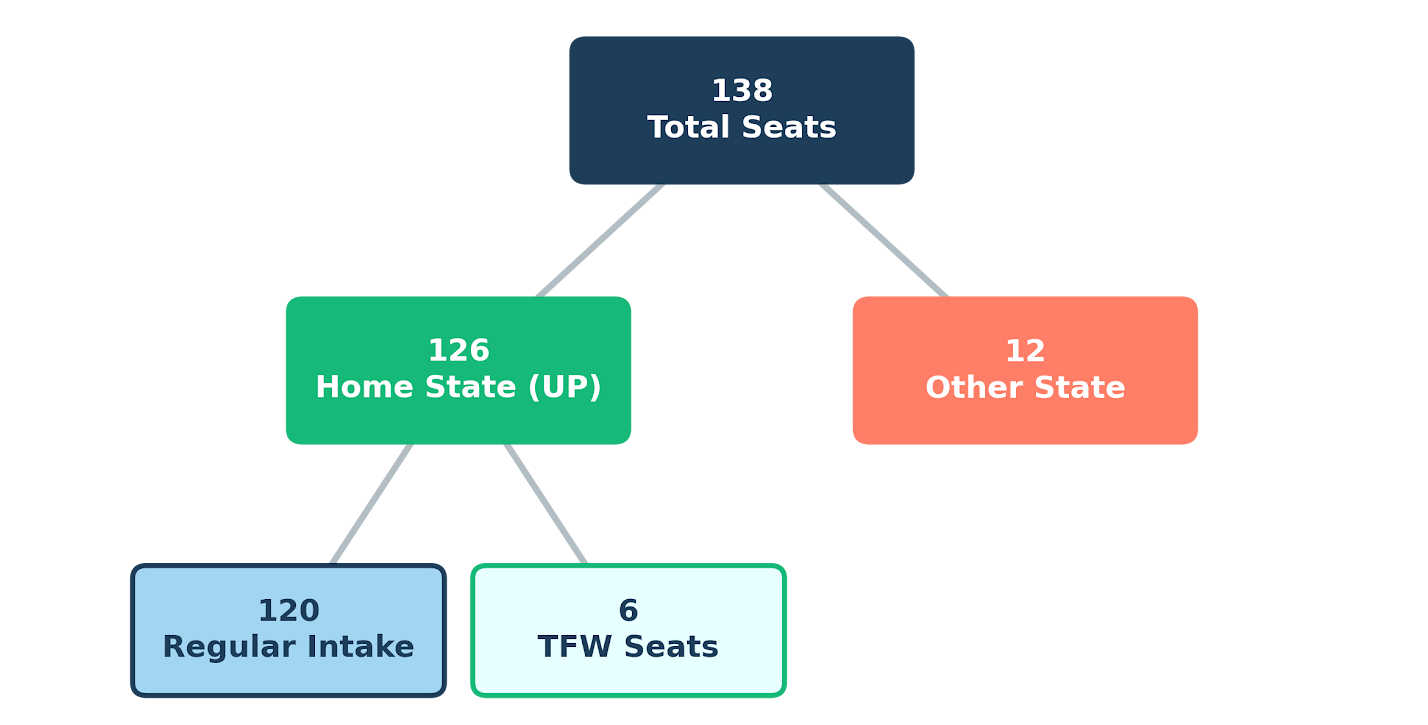
Along with this, there are 6 extra Tuition Fee Waiver (TFW) seats (which is 5% of the regular intake) strictly reserved for UP Home State students. So, the total number of seats for Home State candidates becomes 126 (120 regular + 6 TFW). The remaining 12 seats (10% of the regular intake) are reserved for Other State candidates, bringing the final total to 138 seats. Also, keep in mind that Lateral Entry (diploma) seats are completely separate from these 138 first-year seats. One big advantage of MMMUT is that almost every branch has a high seat intake. Because of this, students currently have a good chance of securing a seat even at relatively higher ranks. However, as the college's popularity increases over time, the competition will definitely get tougher and getting a seat won't be this easy.
Electrical Engineering (EE) Placements: 2026 Batch

- Vanshita

- Astha Singh

- Suparna Tripathi
- Deepanshi Gupta
Past Recruiters for Electrical Engineering at MMMUT
Talking about Electrical Engineering placements at MMMUT, the core sector opportunities are actually quite solid. If you look at past placement drives, several major core companies regularly visit the campus. They mostly pick students for roles in power distribution, electronics manufacturing, and defense tech.
| Company Type | Top Recruiters (MMMUT EE) |
|---|---|
| Core Electrical & Power | |
| IT Services & Tech |
NOTE: The list of visiting companies vary every year depending on the market situation. So, for the exact and latest stats, it's always best to cross-check with the official MMMUT placement portal once.