Table of Contents▼
- Available Branches
- About DDUGU Gorakhpur
- Key Highlights
- Campus Environment
- B.Tech Admission Process (First & Second Year)
- Admissions for BCA, MCA & M.Tech Programs
- About DDUGU Entrance Exam
- Eligibility Criteria
- Seat Intake of DDUGU
- Fee Structure - DDUGU BTECH
- Academics & Study Culture
- Placements at DDU
- Inside the Central Library: DDU Gorakhpur
- Outside DDU Campus (Location Advantage)
Available Branches
Deen Dayal Upadhyaya Gorakhpur University, Gorakhpur currently has the following branches available on PYQora. Choose a branch to open its dedicated view, where subjects will be shown semester-wise in a simpler and more useful way.
- Computer Science and Engineering
- Electronics and Communication Engineering
- Information Technology
- Mechanical Engineering
About DDUGU Gorakhpur
Deen Dayal Upadhyaya Gorakhpur University (DDUGU), Gorakhpur is a state university spread over about 190.96 acres, located about 2 km from the city centre and close to Gorakhpur railway station. The university came into existence in 1956 through an Act passed by the Uttar Pradesh Legislature and started functioning on 1 September 1957 with Arts, Commerce, Law and Education faculties before adding Science and later Engineering.
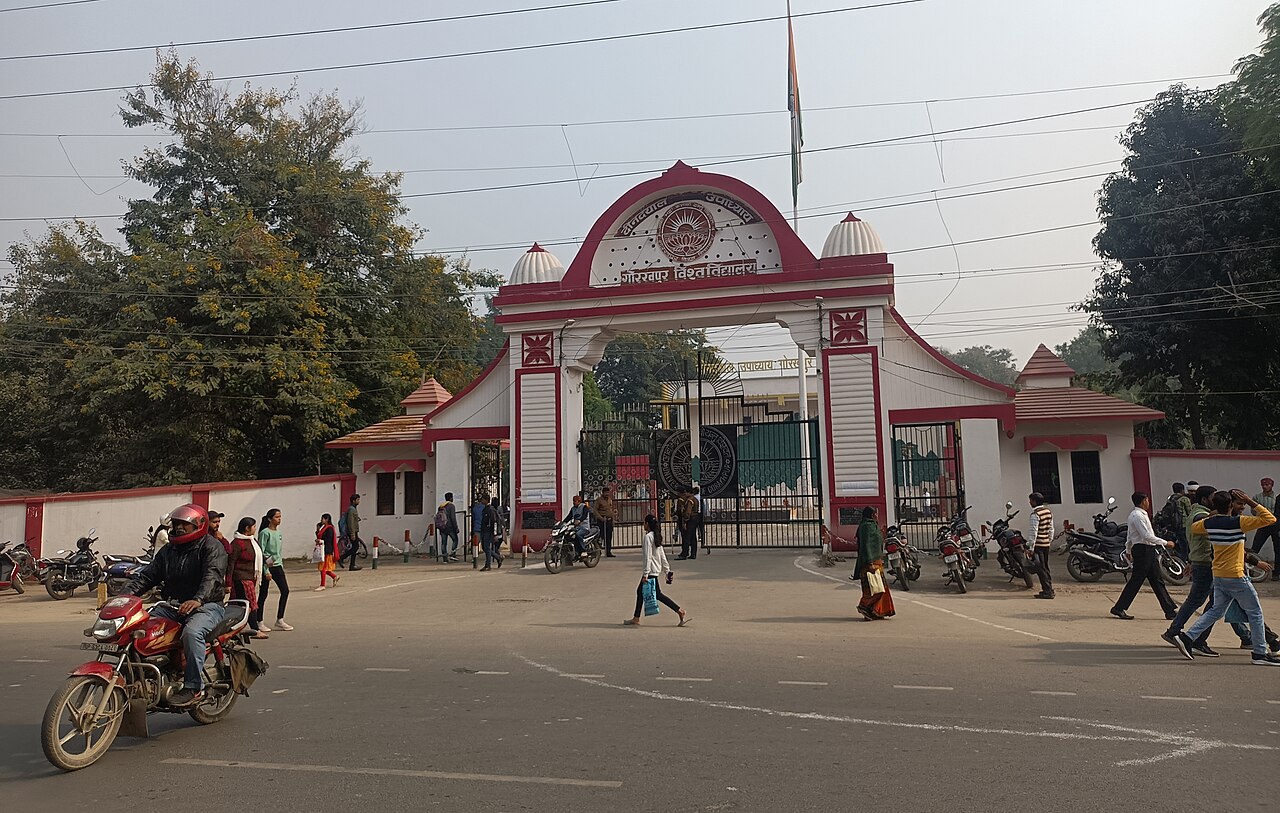
Today, its Faculty of Engineering and Technology offers around 675 B.Tech seats, and in NIRF 2025 DDU entered the top 100 State Public Universities while also appearing in the 151-200 band among universities.
Key Highlights
- Historic State University with a newly established B.Tech department (IET).
- Premium Civil Lines Location offering a 5-minute walk to City Mall and railway station.
- High Intake Capacity (150 seats in CSE/IT) makes it a very safe backup at lower JEE ranks.
- Dual Admission Routes: UPTAC (JEE Main) counseling and the university's own DDUGU test.
Campus Environment
Campus life at DDU’s IET has a practical, student‑level feel: classroom space is limited, so first‑year lectures are held in Diksha Bhavan, and only CSE and IT consistently have dedicated classrooms and labs on the main department campus; students from ECE and ME often need to go to Majithiya Bhavan for lab work. The department library is small (around 80–90 seats), so it fills up quickly when students from all branches come together.
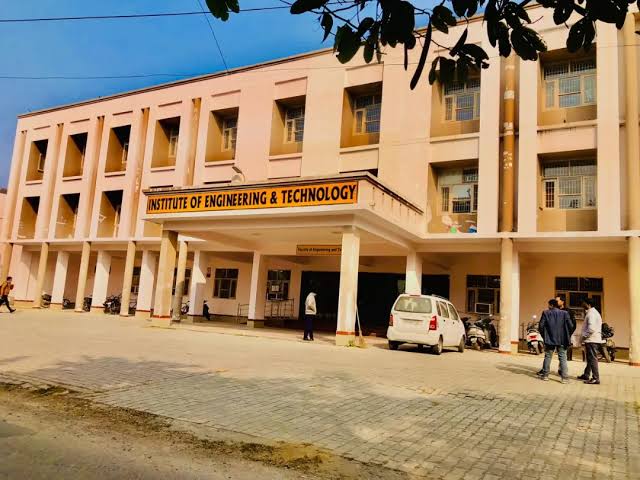
Basic facilities work but have issues — drinking water often requires visiting another department, many classroom ACs are nonfunctional, and a number of projectors are either broken or missing — yet most scheduled classes run as planned. Hostel accommodation is available but typically allotted only to students whose homes are more than 200 km away; the mess is serviceable. On the convenience side, food‑delivery services (Zomato, Swiggy, Blinkit, Zepto) deliver inside campus, and the walk from the main gate to the classrooms is roughly 500 m, which most students find manageable. Overall, the campus gets the job done, though newcomers should expect to adapt to limited space and mixed infrastructure while making the most of on‑campus resources.
B.Tech Admission Process (First & Second Year)
For students opting through the DDUGU entrance exam, registration requires a fee of ₹1,350. After the exam, results are published with general and category ranks, and candidates must pay ₹100 to participate in counseling. Based on their result, seats are allotted, and within about three days an official notice is sent via email confirming the seat. To finalize admission, students must pay the first-semester fee of ₹53,133, after which they are called for document verification on campus. Verification is typically scheduled over a three-day window, and once completed, students receive a receipt that serves as the official seat allotment letter.
For those entering via UP-TAC based on JEE Main rank, the process begins with online registration on the counseling portal, requiring a non-refundable fee of ₹1,000. Counseling is conducted in four online rounds, where seat allotment depends on choice filling and merit. Once a seat is allotted, candidates must pay a seat acceptance fee of ₹20,000 (General/OBC) or ₹12,000 (SC/ST), which is later adjusted against the academic fee. After the four rounds, an internal sliding takes place, and any remaining seats are filled through spot counseling conducted offline at the college.
Direct Admission is available through DDU for candidates with a valid JEE Main scorecard, accounting for the remaining 20% of seats. Candidates can apply directly on the DDUGU Admission Portal without participating in UPTAC, and seats are allotted strictly based on the merit list and availability. This provides a straightforward pathway for students wanting to bypass the extended state counseling rounds.
Lateral Entry (Second Year)
Additionally, lateral entry into the second year is available for candidates holding a 3-year Diploma or a B.Sc. (Mathematics) degree. They can secure admission either by qualifying CUET (UG/PG) followed by counseling, or through the Direct Admission mode based strictly on merit via the DDUGU Admission Portal.
Admissions for BCA, MCA & M.Tech Programs
BCA & MS (AI)
Entrance BasedAdmissions to all BCA specializations (IoT, MLDS, AIML) and MS in Artificial Intelligence are conducted strictly through the DDUGU Entrance Test.
MCA
Entrance BasedAdmission to the Master of Computer Applications (MCA) program is based purely on the entrance examination conducted by the DDUGU Admission Cell.
M.Tech (All Branches)
GATE / EntranceM.Tech admissions offer two flexible modes: Direct admission for candidates holding a valid GATE scorecard, or through the DDUGU Entrance Examination.
About DDUGU Entrance Exam
B.Tech Syllabus (100 Questions)
The B.Tech Entrance Test shall consist of 100 objective multiple-choice questions of the Intermediate examination level of the U.P. Secondary Education Board.
| 1. General Science | 10 questions |
| 2. Mathematics | 35 questions |
| 3. Physics | 35 questions |
| 4. Chemistry | 20 questions |
BCA (AI&ML, IoT, ML&DS) Syllabus
| 1. General English | 10 questions |
| 2. General Knowledge | 20 questions |
| 3. Mathematical Reasoning and Logic | 20 questions |
| 4. General Science | 25 questions |
| 5. General Mathematics (High School level) | 25 questions |
M.C.A. and MS (Artificial Intelligence) Syllabus
| 1. General English | 15 questions |
| 2. General Knowledge | 10 questions |
| 3. Reasoning and Logic | 40 questions |
| 4. Mathematics | 35 questions |
M.Tech (CSE/IT/ECE/ME) Syllabus
Syllabus of Entrance test for M.Tech. Programs will be as per GATE-2026. This test contains 100 questions.
- The Test shall be of two hours duration.
- Each question shall carry 02 marks (Total 200 marks). No marks shall be deducted for a wrong answer.
- Except language-related questions, B.Tech and BCA papers will be in both English and Hindi. MCA, M.S., and M.Tech (CSE) will be exclusively in English.
- Only the OMR answer sheet will be evaluated. Candidates must choose the correct answer by shading the circle with a black/blue ball pen.
Note: The above questions are cited as examples and have no relation to the actual question paper.
Eligibility Criteria
🎓 B.Tech (First Year)
The candidate should have passed 10+2 examination with at least 45% marks (40% for SC/ST) with Mathematics, Physics and one of the following subjects: Chemistry/ Biotechnology/ Computer Science/ Biology.
🎓 B.Tech (Lateral Entry)
Passed 2/3 year Diploma OR B.Sc. Mathematics with minimum 45% marks (40% for SC/ST) from recognized institutions in any branch of Engineering except Agriculture Engineering. (NTA Test Score is not mandatory).
💻 BCA (ML&DS, IoT, AI&ML)
To be eligible for BCA program candidates must have passed 10+2 examination or its equivalent with a minimum of 45% aggregate.
🚀 M.Tech (CSE & IT)
The candidates should have B.E.(CSE/IT) / B.Tech.(CSE/IT) / MCA / M.Sc. in relevant stream from a recognized university with minimum 60% aggregate (55% for SC/ST).
📡 M.Tech (ECE)
Bachelor's Degree in Engineering/Technology (Electrical/ Electronics/ Communication/ Instrumentation/ Computer Science) / M.Sc (Physics/Electronics) or equivalent professional degrees (AMIE, etc.) with minimum 60% aggregate (55% for SC/ST).
⚙️ M.Tech (ME)
The candidates should have B.E.(ME) / B.Tech.(ME) in relevant discipline from a recognized university with minimum 60% aggregate (55% for SC/ST).
🖥️ M.C.A.
The candidate should have a BCA degree. - OR - Graduation / Post Graduation in any stream with a minimum of 50% aggregate (45% for SC/ST) with Mathematics as a compulsory subject in Class 12 or Graduation level.
🧠 M.S. (Artificial Intelligence)
The candidate should have passed Graduation or Post Graduation in any stream with a minimum of 50% aggregate (45% for SC/ST).
Seat Intake of DDUGU
One of the significant advantages of DDU Gorakhpur University's B.Tech program is its substantial seat matrix, particularly in technology-oriented branches. With a robust intake of 150 seats each in core Computer Science & Engineering (CSE), CSE (AI & ML), and Information Technology (IT), the university offers a comparatively high volume of opportunities for tech aspirants.
| S.No. | Branch (B.Tech. First Year) | Seats |
|---|---|---|
| 1. | B.Tech. (CSE) | 150 |
| 2. | B.Tech. (CSE-AIML) | 150 |
| 3. | B.Tech (CSE-AI&DS) | 75 |
| 4. | B.Tech (ECE) | 75 |
| 5. | B.Tech. (IT) | 150 |
| 6. | B.Tech. (ME) | 75 |
Historically, this expanded capacity often results in relatively moderate competition during the normal counseling rounds. As a result, candidates with higher closing ranks frequently find it more accessible to secure a seat in these high-demand specializations compared to institutions with highly restricted intakes. Disclaimer: While past trends suggest a higher probability of admission at broader rank ranges, actual seat allotment is strictly subject to the annual applicant pool, candidate preferences, and official counseling cutoffs for that specific academic year.
Fee Structure - DDUGU BTECH
For B.Tech students at Deen Dayal Upadhyay Gorakhpur University (DDU), the first semester fee is ₹52,698, which must be paid in a single online transaction through the Samarth portal by logging in with your student ID. Before the start of Semester 2, students are required to pay a semester registration fee of ₹1,350 (University Component), followed by the course component fee of ₹50,000, making the total for Semester 2 ₹51,350.
| Fee Category | Amount (₹) | Payment Schedule & Details |
|---|---|---|
| Semester 1 Fee | ₹52,698 | Paid via Samarth Portal using Student ID (Single transaction) |
| Even Semesters (Sem 2, 4, 6, 8) | ₹51,350 | ₹1,350 University Component + ₹50,000 Course Component |
| Odd Semesters (Sem 3, 5) | ₹52,383 | ₹2,383 University Component + ₹50,000 Course Component |
| Semester 7 Fee | ₹52,883 | ₹2,883 University Component + ₹50,000 Course Component |
| Total Annual Cost (Day Scholar - 1st Year) | ~ ₹1,04,048 | Combined academic fee for Sem 1 and Sem 2 |
| Hostel Charges | ₹8,200 | Additional annual room accommodation fee |
| Mess Charges | ₹30,000 | Annual mess and fooding expense |
| Total Annual Cost (Hosteller - 1st Year) | ~ ₹1,42,248 | Academic Fee + Hostel Charges + Mess Charges |
The same pattern continues across the course: ₹52,383 for Semester 3, then ₹1,350 registration plus ₹50,000 fee for Semester 4, and so on until Semester 8 (where Semester 7 is ₹52,883 and Semester 8 is ₹51,350). For day scholars, the total annual fee for the first year comes to exactly ₹1,04,048. Students opting for hostel accommodation pay an additional ₹8,200 per year as hostel charges, along with a mess fee of ₹30,000 per year, bringing the total annual cost for first-year hostellers to about ₹1,42,248. Apart from the standard fee structure outlined above, internal student feedback and campus reviews indicate that students occasionally encounter additional miscellaneous expenses. According to these student-sourced reports, an incremental amount of approximately ₹400 is often levied as processing or departmental charges for various individual university services and official documentation throughout the academic cycle. All payments are made exclusively through the Samarth portal, ensuring a streamlined and transparent process. Compared to many other government engineering colleges, the fee at DDU is relatively affordable, making it a practical choice for students seeking quality education with manageable expenses.
Academics & Study Culture
Let's be brutally honest—since the B.Tech program (IET) is a relatively recent addition to this historic traditional university, the hardcore engineering study culture is still evolving. You won't find a decades-old technical society, high-level robotics clubs, or a massive hackathon culture right away. The scheduled classes mostly run as planned, but for advanced coding or core technical subjects, you will have to rely heavily on self-study, YouTube tutorials, and your peer group. Your biggest advantage here is 'Time'. Because the academic pressure isn't as suffocating as premium private colleges, smart students use these free hours to build their own skills, learn web development, or practice competitive programming on platforms like LeetCode.
Placements at DDU
The B.Tech program at Deen Dayal Upadhyaya Gorakhpur University (DDU) is a relatively recent initiative that officially commenced in the year 2021, which naturally means the engineering department is still in its foundational growing phase with limited publicly available placement records and a smaller pool of past recruiters. Here is the list of companies that have participated in the recent placement drives.














This is the most critical factor you need to accept before joining. Because the B.Tech wing is relatively new, DDU does not yet have a deeply established engineering alumni network or a heavy lineup of IT mass recruiters visiting the campus specifically for B.Tech. You cannot expect 'Day-Zero' placements with companies like Amazon or Microsoft walking into the campus. Most engineering students here focus heavily on off-campus placements, utilizing platforms like LinkedIn, Naukri, and Unstop. Come with the mindset that the university will give you a recognized government degree and plenty of free time, but you will have to hustle for off-campus software jobs or prepare for exams like GATE strictly on your own.
Inside the Central Library: DDU Gorakhpur
The Central Library of Deen Dayal Upadhyaya Gorakhpur University spans over 4,000 square meters and houses a massive collection of more than 4 lakh text materials. It actively serves over 15,000 students, faculty, and research scholars across five faculties. The ground floor features the Central Text Book Section (CTBS) for regular UG and PG book distribution. It also includes Nehru Hall, a dedicated reading room for newspapers and magazines, and a Stack Section reserved strictly for teachers and researchers. The first floor houses Gandhi Hall, a major reference room equipped with dictionaries, encyclopedias, maps, and statistical resources, alongside a dedicated research Journal Section. To support modern learning, the library provides OPAC (Online Public Access Catalogue), remote access to e-resources, plagiarism detection tools, and internet-enabled computers, including specialized Braille-compatible stations for visually impaired users. Additionally, a dedicated Cyber Library is currently under development to further enhance digital accessibility. In addition to the central facility, the Institute of Engineering and Technology (IET) maintains a specialized departmental library tailored for its core branches. It features advanced resources on algorithms, AI ethics, and cybersecurity for CSE and AI/ML; database management and cloud computing for IT; thermodynamics and manufacturing for Mechanical Engineering; and circuit design and signal processing for Electronics and Communication. Together, these facilities provide a complete and accessible academic ecosystem for the university community.
Outside DDU Campus (Location Advantage)
This is where DDU beats almost every other college in the region. The campus is located in Civil Lines, which is the absolute VIP heart of Gorakhpur city. Step out of the gate, and you are literally a 5-minute walk away from City Mall, major cafes, Domino's, and the premium Golghar market. Gorakhpur Junction railway station and the main bus stand are barely 1.5 to 2 km away; a quick ₹10 e-rickshaw ride drops you there in 5 minutes. If you don't meet the '200 km' hostel criteria, adjacent areas like Daudpur, Betiahata, and Chhatra Sangh Chauraha are packed with affordable student PGs, private hostels, and tiffin centers. You will never struggle for transport, late-night food, or daily essentials here.